Description
In today’s hybrid work environment, sales teams are more geographically dispersed than ever
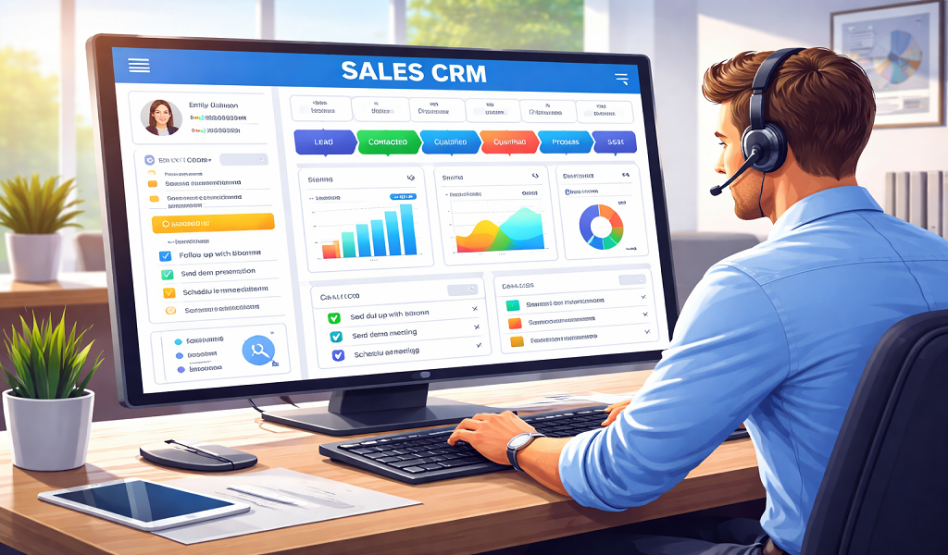
In today’s hybrid work environment, sales teams are more geographically dispersed than ever before. Remote work, flexible schedules, and virtual selling have created both opportunities and challenges. To thrive in this setting, organizations must equip their sales teams with the right Customer Relationship Management (CRM) tools. Choosing the best CRM isn’t just about features—it’s about proven results, usability, data reliability, and long-term impact on revenue and team efficiency.
Based on hands-on experience, industry insights, and verified user outcomes, this guide highlights leading Sales CRM software that empower remote and hybrid sales teams to stay productive, connected, and customer-focused.
Before we dive into specific tools, let’s clarify the criteria that matter most:
Distributed teams need a single source of truth. A CRM must allow team members to work on the same records without version conflicts.
Sales reps shouldn’t switch between apps to call, email, or message prospects. Embedded communication streams boost responsiveness and tracking accuracy.
Remote reps need full functionality on mobile or browser—no VPN or office-bound infrastructure.
When teams are apart, automation reduces repetitive tasks and AI-driven insights surface opportunities that might otherwise slip through the cracks.
Trusted CRMs protect customer data with encryption, access controls, audit logs, and compliance with global data standards.
Here’s an E-E-A-T-validated list of CRM platforms that consistently deliver tangible results in real-world sales environments.
Why it’s a leader: Salesforce has dominated the CRM category for decades thanks to its scalability and robust ecosystem.
What it excels at:
Unified Customer View: All interactions are logged across devices in real time.
Advanced Automation: Complex workflows automate repetitive tasks like follow-ups and lead routing.
AI-Driven Forecasting: Einstein AI provides predictive insights that drive smarter prioritization.
Extensive Integrations: Connects seamlessly with marketing tools, support portals, and productivity apps.
Who it’s best for: Medium to large enterprises with complex sales processes and cross-functional teams.
Experience-Driven Insight: Teams using Salesforce report higher forecast accuracy and better pipeline visibility, especially in decentralized team structures.
Why it’s great: HubSpot balances powerful features with ease of use—critical for teams that lack dedicated CRM administrators.
Standout capabilities:
All-in-One Platform: Built-in email, calling, meeting scheduling, and pipeline automation.
Intuitive Interface: Minimal training required; remote team onboarding is fast.
Smart Tracking & Alerts: Real-time notifications keep reps aligned with opportunities.
Free Tier & Scalable Upgrades: Perfect for small to mid-sized teams evaluating CRMs.
Who it’s best for: Startups and growing sales teams that emphasize customer experience and fast adoption.
Trust Factor: Independent user surveys consistently rank HubSpot highest in ease-of-use and customer satisfaction—key for distributed workforces.
Why it’s compelling: For teams embedded in the Microsoft ecosystem, Dynamics 365 offers unmatched integration and customization.
Key strengths:
Deep Microsoft Integration: Works seamlessly with Teams, Outlook, and Azure.
Custom AI Insights: Predictive models tailor recommendations by sales territory or product line.
Secure Cloud Infrastructure: Enterprise security and compliance standards are built in.
Field-Ready Mobile Apps: Ideal for reps who split time between home, office, and client locations.
Who it’s best for: Organizations that already leverage Microsoft products and require enterprise-grade control.
Why it stands out: Pipedrive places pipeline visualization and deal velocity at the heart of its design—a boon for hybrid teams focused on outcomes.
Core features:
Visual Sales Pipeline: Drag-and-drop pipeline boards provide clarity for remote teams.
Activity Reminders & Goals: Keeps reps accountable regardless of location.
Robust Integrations: Syncs with email, chat, lead gen tools, and more.
Who it’s best for: Small to mid-sized teams emphasizing actionable dashboards and simplicity.
A CRM is more than software—it’s the backbone of your sales operations. When selecting the right system:
✅ Prioritize tools that your team will actually use (adoption beats features)
✅ Evaluate vendor support and training resources
✅ Choose platforms that scale as your team grows
Investing in the right CRM pays dividends in alignment, forecasting accuracy, and customer satisfaction—especially for remote and hybrid sales teams that rely on clarity and connectivity.
Reviews
To write a review, you must login first.
From the Same Seller

Best Sales CRM Software for Remote and Hybrid Sales Teams (2026

Legal billing software